Further contributions

Since the opening of Munich Airport in 1992 at the latest, more and more people have been drawn to the city in the north of the state capital. The community in Erdinger Moos has grown by more than 175 percent to almost 11,000 inhabitants over the past 25 years, making it one of the fastest developing communities in the district. The result is urban transformation and conversion processes as well as the strategic expansion of infrastructure. But one question is often neglected: what do residents need to feel at home in a place? Prof. Dr. Martina Baum, architect and urban planner from the University of Stuttgart, designed the spatial and urban development concept for Hallbergmoos on behalf of the municipality. In this interview, she explains what makes a place worth living in – and what doesn’t.
Ms. Baum, what do you think it takes to arrive in a city?
Martina Baum: Places that appeal to me, that I like to go to and that I perceive as part of my everyday life and then make them my own. That could be a nice jogging route, a park bench with a view or the pub around the corner. But also the opportunity to make social contacts. Low-threshold conversations with the baker, at the sports club or with a neighbor. This creates personal relationships. To the place and to the people.
How much time do you estimate it takes to arrive in a city?
Martina Baum: I can’t say that across the board. It depends entirely on the person. How open and sociable they are. How much they relate to the place and the people there. And, of course, how inviting the place is. This relates to the appearance of the place, but also to the openness of the existing residents, the clubs, the administration, etc. to integrate newcomers.
What can the city do structurally to make people feel at home more quickly?
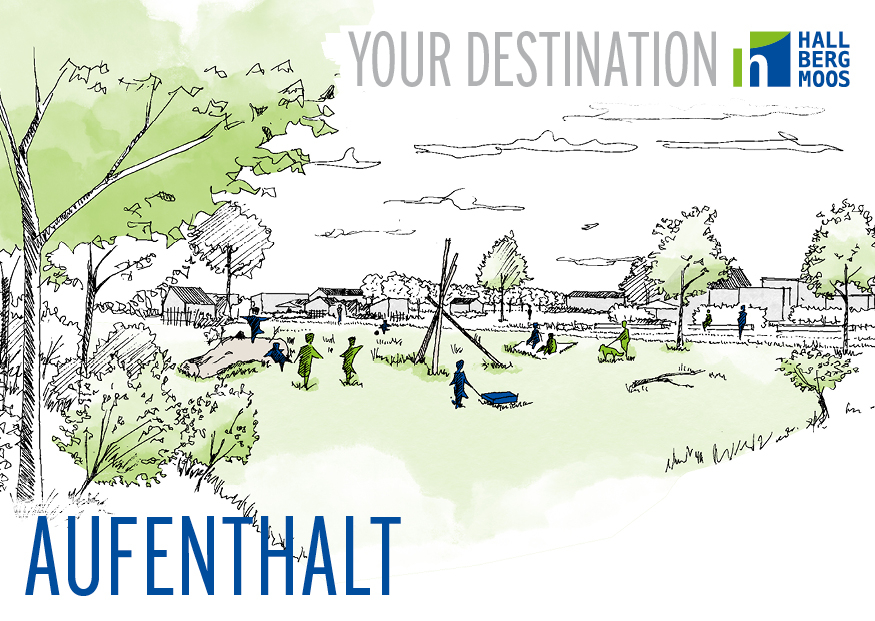
Martina Baum: The city must offer quality of life. People have to feel comfortable there, identify with the place and, in the best case, be proud to live and work here. We often spend just as much time in the places where we work as we do in our homes. A high quality of life means an attractive building structure with high-quality open spaces, short distances, an approachable administration, very good social and cultural infrastructure, a wide range of amenities and leisure facilities, local recreational opportunities.
What urban planning sins are there?
Martina Baum: Not to strengthen one’s own identity but to look like any other place. Not paying attention to architectural quality. Whether in residential or commercial construction. Giving too much space to motorized traffic. Both stationary and moving. Focusing only on the buildings and paying little attention to the open spaces. The immediate recreational areas are also very important for smaller towns.
How do you try to avoid them?
Martina Baum: By doing good urban development planning. However, this alone is not enough. You also need the will and the strength of politicians to pursue concepts in the long term and an administration that has the resources to implement them on a day-to-day basis.

What are the goals behind the urban development planning in Hallbergmoos?
Martina Baum: Hallbergmoos wants to continue to develop as an attractive place with a high quality of life. The enormous growth of recent decades means shaping the transformation from a village to an internationally networked, urban community – without losing the specific qualities of the town and village life. The aim of the spatial model is to do this actively and not to react passively.
How much time does Hallbergmoos have to achieve these goals?
Martina Baum: The location in the Munich metropolitan area is very attractive and demand is high. So is the desire. Nevertheless, the pressure should not lead to hasty action. A strategic and broad-based spatial vision is the basis for satisfying needs and demands and always keeping an eye on the big picture.
What makes a home? Or when do you feel at home in a city?
Martina Baum: By identifying with the place, by feeling part of it. I have my favorite pub, my favorite bakery, my favorite spot in the park and my acquaintances and friends here; I have the feeling that I can lead a good life here.
Thank you very much!
Image material © UTA/Urbane Strategien
You need to load content from hCaptcha to submit the form. Please note that doing so will share data with third-party providers.
More InformationYou need to load content from reCAPTCHA to submit the form. Please note that doing so will share data with third-party providers.
More InformationYou need to load content from Turnstile to submit the form. Please note that doing so will share data with third-party providers.
More InformationYou are currently viewing placeholder content from Google Maps. To access the actual content, click on the button below. Please note that data will be shared with third-party providers.
Further informationYou are currently viewing a placeholder content from OpenStreetMap. To access the actual content, click the button below. Please note that doing so will share data with third-party providers.
More Information