Further contributions

Everyone must be involved when it comes to the possibilities of IT use in the company. This is especially true when it comes to further training. How this can be implemented was discussed at the “Learning in the 21st century” event at the Munich Airport Business Park (MABP) in Hallbergmoos on November 27. The conference was organized by the magazine Computerwoche and supported by the municipality of Hallbergmoos. The event was moderated by the two editors Alexandra Mesmer and Hans Königes. Around 150 representatives from the fields of corporate management and HR management attended.
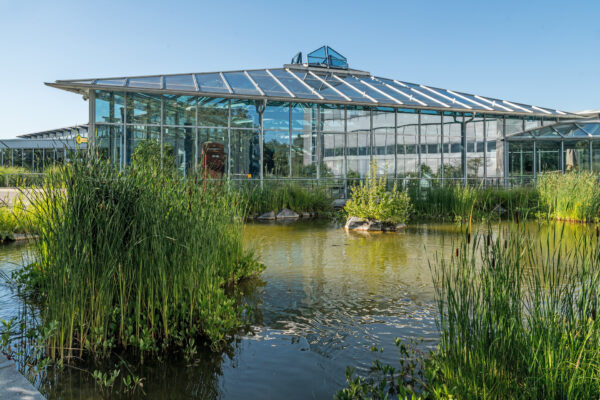
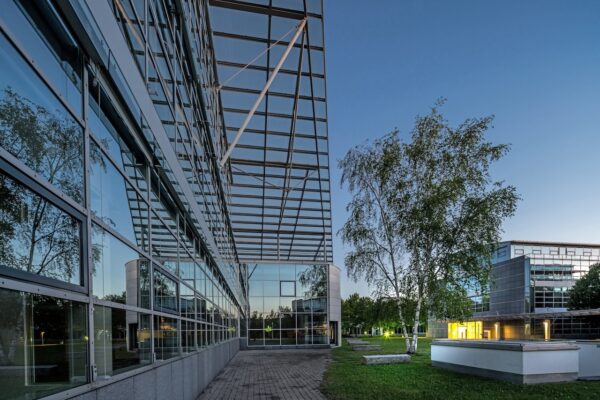
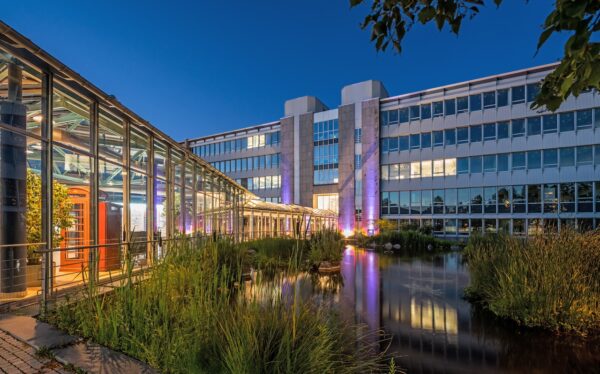
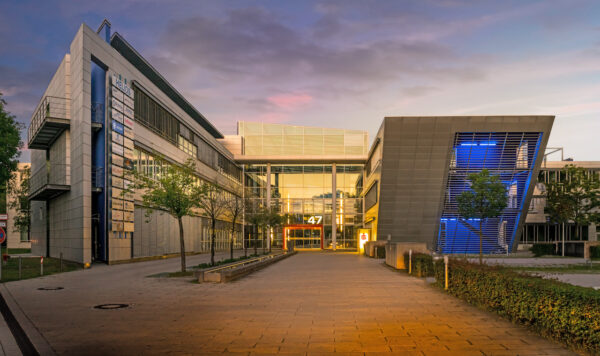
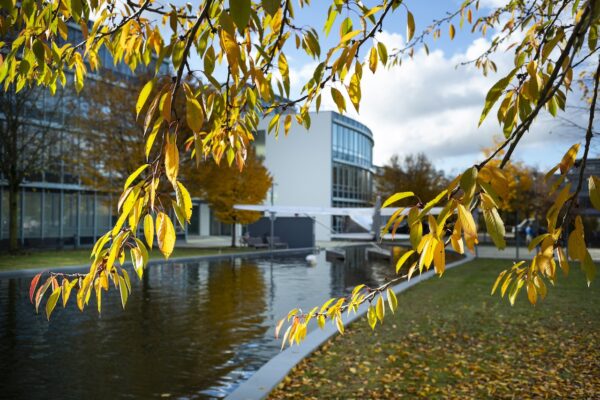
Harald Reents, First Mayor of the municipality of Hallbergmoos, welcomed the guests in the conference room of the ABC Center. The building is the heart of the office park with a total of 186,700 square meters of office space for around 260 companies. The venue was chosen with care, as many of the local companies come from the IT sector – an excellent basis for successful networking. Another welcome address came from Jonas Triebel, Managing Director of IDG Germany. Computerwoche is also part of IDG Communications Media AG.
Continuing education has long been an undisputed task. However, opinions differ as to what this can and should look like in the digital age. According to the experts, the possibilities are far from exhausted. During the congress, academics and practitioners therefore shed light on what knowledge and requirements the digital future needs.
Digital learning for employees
Klaus Kreulich, Vice President of the University of Applied Sciences in Munich, kicked things off. Among other things, he is responsible for innovation management in teaching and studies as well as academic quality management. To kick off the presentations at the MABP Center, he explained what companies are doing in terms of digital learning and what employees should be able to do.
The CEO and co-founder of the Innovation Center for Industry 4.0 in Regensburg, Philipp Ramin, then described what this could look like in concrete terms. Discontinuous innovation and business models was the topic of his dissertation. In his contribution, it became clear that employees must also see the connection to their respective work when learning. Not everyone can and must become a data scientist.
No one should be left behind
It is important to work together, to involve everyone in their respective responsibilities. Hubert Hoffmann, CIO and CDO of MSC Germany, summed this up very clearly. In the container shipping industry, many things still function as they did three quarters of a century ago. It works – and yet it is clear that some things can be streamlined and made more effective with the help of suitable computer programs. Digital culture only works if everyone sticks together, if old and young inspire each other, he believes. Some things can be implemented more easily in an entrepreneur-managed company than in a public limited company, for example.
Women’s power in the IT sector
The fact that women can also have a significant influence in the industry was underlined by the presence of Inga Dransfeld-Haase. The President of the German Association of Personnel Managers (BPM) and Head of Human Resources at Nordzucker AG described digital learning as the driving force behind HR 4.0. Digitalization is indispensable for a company like Südzucker. Nevertheless, not every employee needs to have the same knowledge. Nevertheless, the beet farmer is also connected to the network – with the information on his home computer that is important for his work.
New technologies are changing personnel development. Jonathan Sierck, CEO and co-founder ofMorgen, is well aware of this. Employees are motivated when employers invest in their development – virtual reality is a tool that has proven its worth in the experience of the learning expert. He demonstrated how this works at the Fair of Ideas.
Learning strategy: traffic light or traffic circle
The last two presentations of the day were given by Daniel Vonier, Global Vice President Vision & Strategy Talent/Leadership/Learning at SAP, and focused on change. Under the title “Unlearning Hierarchy”, he showed how this is happening in the area of personnel development through new technologies. He used the example of traffic management to illustrate the importance of cooperation and a certain degree of personal responsibility: traffic lights or traffic circles? The traffic light gives clear instructions, the traffic circle relies on situational thinking – and is also more effective.
Finally, Volker Maiborn, founder, partner and managing director of Maiborn/Wolff, captivated the participants after an almost nine-hour conference day. “Effective learning – survival training for digitalization” was the title of his presentation. The Munich-based IT service provider, which specializes in strategic IT management consulting and IT project management, focuses on specific tasks and corresponding solutions. The necessary knowledge transfer for this can now take place via digital, target-oriented learning units.
In addition to the comprehensive and varied knowledge transfer in the presentations, a key aim of the event was networking among the participants. The coffee breaks and, in particular, the end of the conference with an extensive get-together and exchange of ideas provided the opportunity for this.
More on this topic in the special issue of Computerwoche 2019 “Learning in the 21st century”.
Image material © IDG Business Media GmbH
You need to load content from hCaptcha to submit the form. Please note that doing so will share data with third-party providers.
More InformationYou need to load content from reCAPTCHA to submit the form. Please note that doing so will share data with third-party providers.
More InformationYou need to load content from Turnstile to submit the form. Please note that doing so will share data with third-party providers.
More InformationYou are currently viewing placeholder content from Google Maps. To access the actual content, click on the button below. Please note that data will be shared with third-party providers.
Further informationYou are currently viewing a placeholder content from OpenStreetMap. To access the actual content, click the button below. Please note that doing so will share data with third-party providers.
More Information