Further contributions

Farmer, car mechanic and curious inventor: Christian Weber is characterized by different qualities. Above all, however, he combines these in his profession – farming. He is the fourth generation to run the Weber family farm, which he took over from his father Rudolf, with passion and dedication. Although this was not the original plan.

Growing up with four siblings on his parents’ farm, he originally trained as a car mechanic. His older brother Josef was actually supposed to take over the farm. After Josef was killed in a car accident, Christian took his place as successor to the farm. Immediately after completing his studies as a state-certified agricultural economist.
“At the blacksmith’s”: Hallberg agriculture with tradition
The name of the farm “Beim Schmied” comes from great-grandfather Nikolaus Weber, who not only ran a small farm in Hallbergmoos, but also a blacksmith’s shop. Just one generation later, they had already made their way to Munich: Christian Weber’s grandmother Wally went to Munich to sell local vegetables. After a short time, she had already secured a permanent place at one of the newly founded weekly markets in Munich.
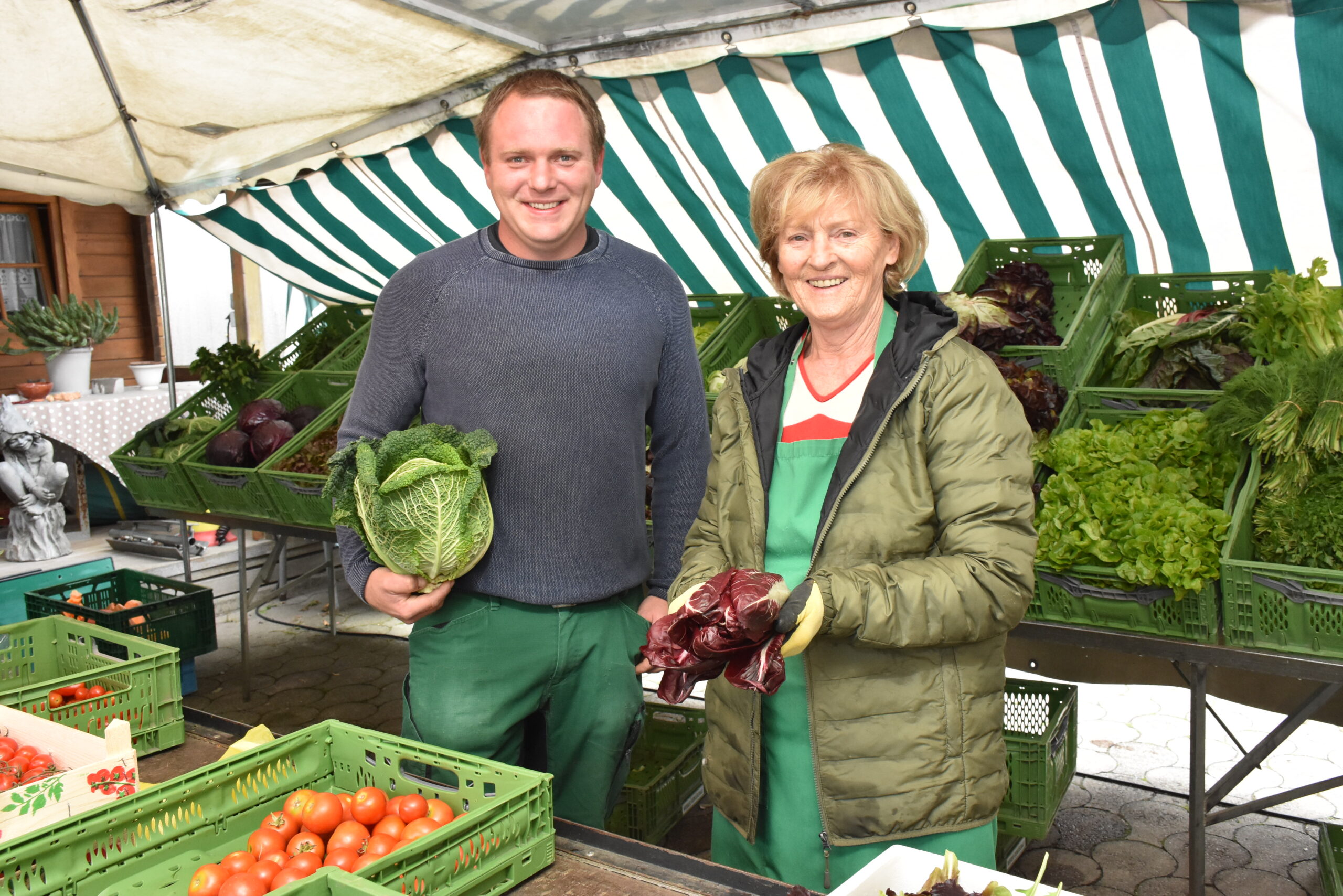
Christian Weber also upholds this tradition: four times a week, he travels to markets in the surrounding area. On Thursdays, he sells from the farm. That’s also a busy day here. The fresh, regional vegetables from his own farm are very popular with customers. They come not only from Hallbergmoos, but also from the surrounding area.
Meanwhile, Weber receives active support from his aunt Mathilde. She also runs the household for him, where his 80-year-old father Rudolf still lives. Their 7-year-old daughter Magdalena is also a frequent visitor – active support, in other words. So what else can the young, dedicated farmer wish for in the future? The answer is clear: “My greatest wish for the time after the coronavirus pandemic is that consumers recognize the value of regional products. This will make them appreciate the work of farmers. We are doing our best to ensure the supply of high-quality, fresh and healthy food. There’s nothing better than having a vegetable garden right on your doorstep,” says Christian Weber.

Malting barley made in Hallbergmoos: A wide range of products thanks to a variety of aids
Christian Weber’s range of produce is impressive: potatoes, carrots, various types of lettuce, cabbage and cabbage, as well as tomatoes, cucumbers, peppers and herbs. “Without all my tractors and machines, it wouldn’t be possible to grow, cultivate and harvest such a large repertoire of vegetables. We still have to harvest a lot by hand, but that makes our work a lot easier,” explains the farmer.

Easier is easy to say. Because the machines and engines need to be serviced. There are six tractors of all sizes and makes on the Weber farm – one even has 190 hp. There are also a lot of other machines that are needed for planting, hoeing and harvesting. The trained mechanic does the maintenance himself, of course. As a trained mechanic, there is no defect that he cannot rectify.
Now nothing stands in the way of maintaining 20 hectares of land and a large greenhouse. In summer, Weber grows tomatoes, cucumbers and peppers in the greenhouse, and various types of lettuce in winter and spring. And for the first time even malting barley – made in Hallbergmoos!
Weber: “Since this year, malting barley has been on my cultivation plan. This allows us to further expand the crop rotation. On the one hand, it’s good for the soil, and on the other, it makes it difficult for diseases and pests to survive.”
Digitalization in the field: precision farming
Christian Weber only has a break between Christmas and March. Every other day, his working day starts at 6 am. During his winter break, however, he cultivates his great hobby: satellite-based steering systems for tractors. He develops these together with other farmers from all over the world and assembles them himself. Two are already in use on his own farm and a third is being used by another farmer.
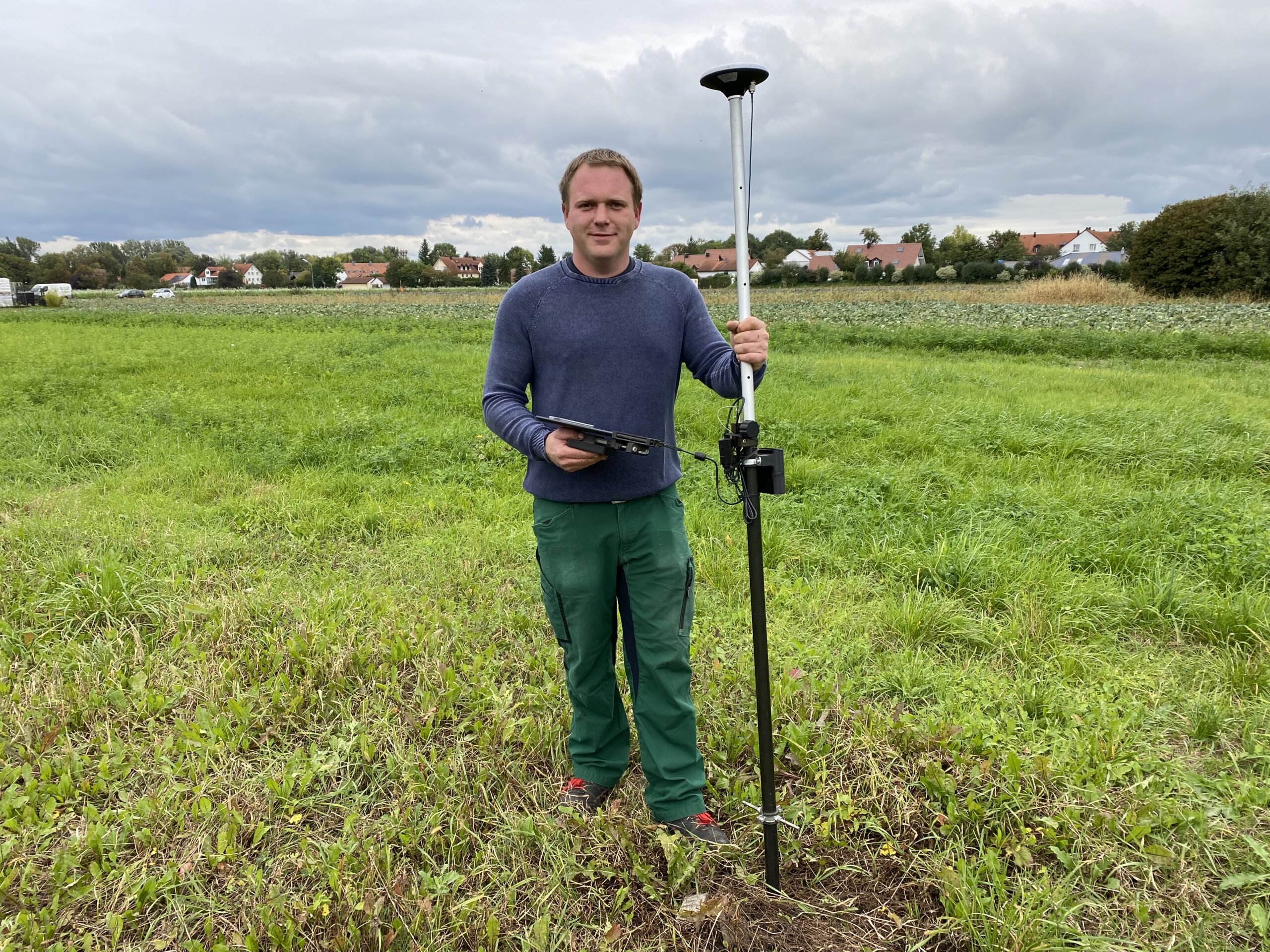
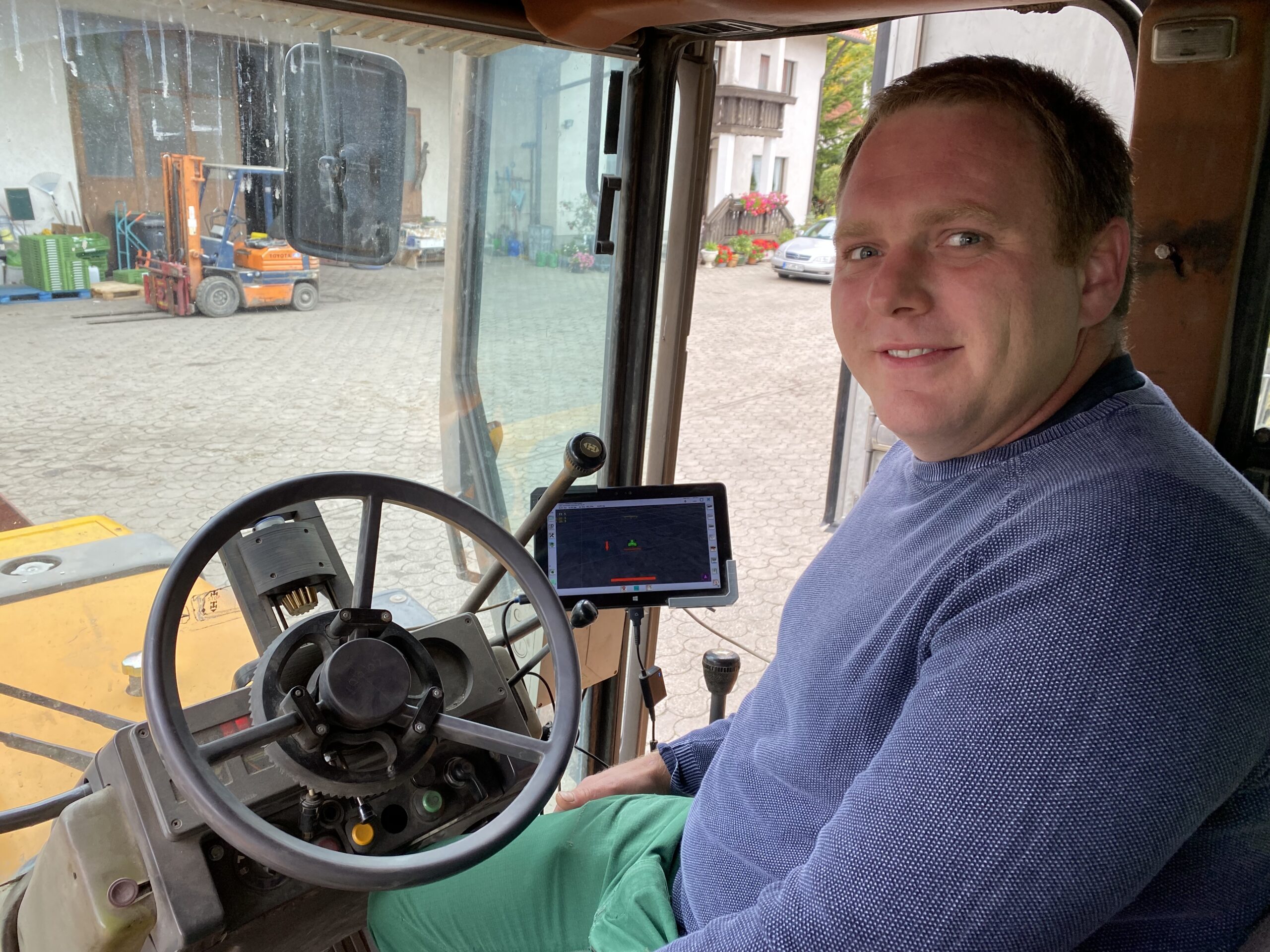
“Precision farming is on the rise! Digitalization does not stop at the field. Whether it’s sowing, fertilizing or tending: You can simply work more precisely and efficiently with it. By steering the tractor with an accuracy of 2 cm, you save on operating resources. This is good for your wallet and the environment. Sitting on the tractor may seem easy, but you have to be highly concentrated at all times and keep an eye on the machine, usually at the rear. You also have to drive straight ahead. The steering system helps enormously here. I get off the tractor much more relaxed in the evening,” says Weber. Buying a commercial system is still too expensive and unprofitable for smaller farms. He prefers to make his own using kit specifications from the Internet: This is no problem for the trained mechanic and hobby tinkerer. On the contrary, he enjoys it and is proud of it.
Photo material (c) Munich Airport Business Park, photo Eva Oestereich
Poster (c) Munich Airport Business Park, picture&more Iris Besemer
You need to load content from hCaptcha to submit the form. Please note that doing so will share data with third-party providers.
More InformationYou need to load content from reCAPTCHA to submit the form. Please note that doing so will share data with third-party providers.
More InformationYou need to load content from Turnstile to submit the form. Please note that doing so will share data with third-party providers.
More InformationYou are currently viewing placeholder content from Google Maps. To access the actual content, click on the button below. Please note that data will be shared with third-party providers.
Further informationYou are currently viewing a placeholder content from OpenStreetMap. To access the actual content, click the button below. Please note that doing so will share data with third-party providers.
More Information