Further contributions

For Dr. Michael Neumüller, the idea for the “Fruitcube” was like good fruit – it had been around for a while, but first had to be brought to maturity and meet official requirements. “By the time everything was ready, the opening was in July 2020, which was a real hit for us. It would have been difficult to sell in the store with customer contact due to the coronavirus measures in place at the time,” says Dr. Neumüller. Whether Bavarian fruit or whole fruit trees: customers can get pretty much anything from him – from his own cultivation.
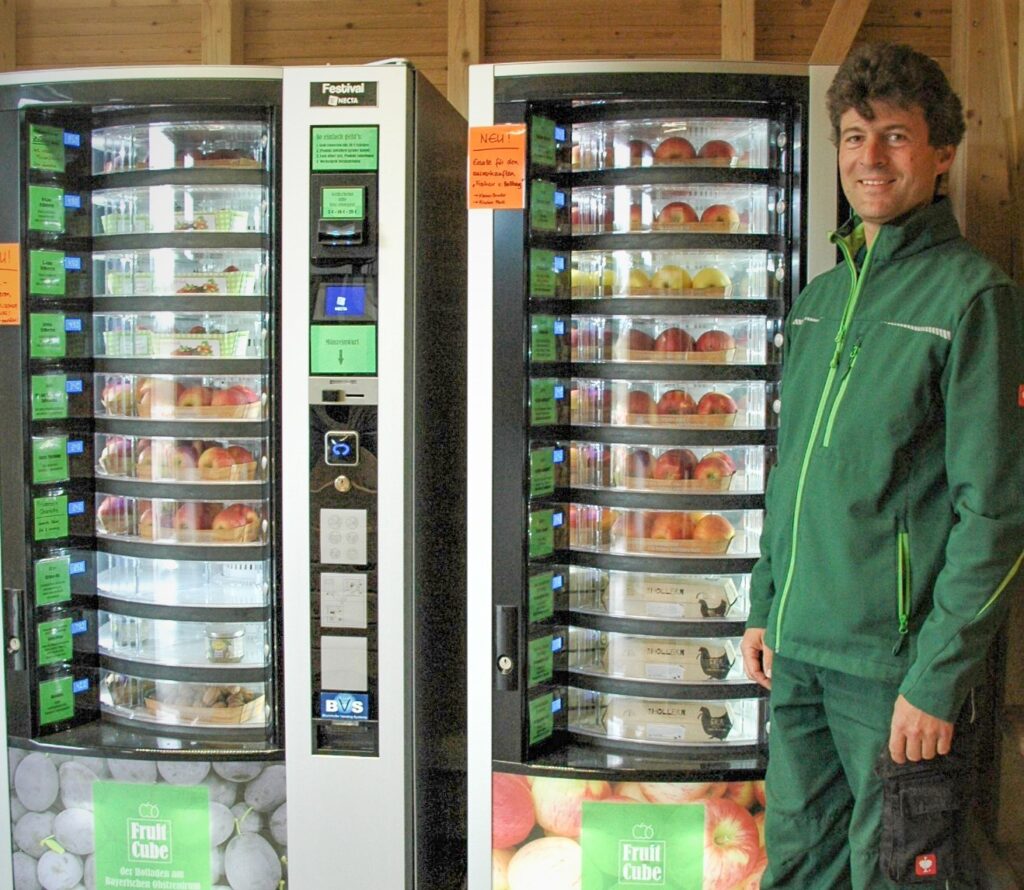
Customers even come from neighboring villages to the street “Am Süßbach” in Hallbergmoos. Here they can help themselves to fresh fruit such as strawberries, apples, pears, cherries and plums from the refrigerated machines. Bavarian fruit. All from our own sustainable cultivation and without synthetic pesticides. In addition to fruit, the shelves also stock dried apple and pear rings as well as apple and fruit mix juices.
In one corner, there are locally grown potatoes, eggs and, in a refrigerated section, ice cream made by a local farmer using his own organic milk. “We have to restock several times at the weekends. Customers really appreciate our fresh fruit. Especially if they have forgotten something when buying in bulk in the stores. Then it’s not far to come to us,” says Neumüller. In addition to video surveillance, he relies entirely on the honesty of his customers when selling. Apart from a few exceptions, everything has been right so far.
Dr. Michael Neumüller comes from a family of vegetable farmers. His parents, Barbara and Johann, have leased additional land to their own field. They grew all the usual vegetables there. The older brother Bernhard continues to run the farm in Mathildenstraße today. The sister went to Italy. And Michael, who was already interested in fruit trees as a child and planted them, studied at the Technical University of Munich in Weihenstephan. He was a research assistant there for eight years before founding the Bavarian Fruit Center in 2003.
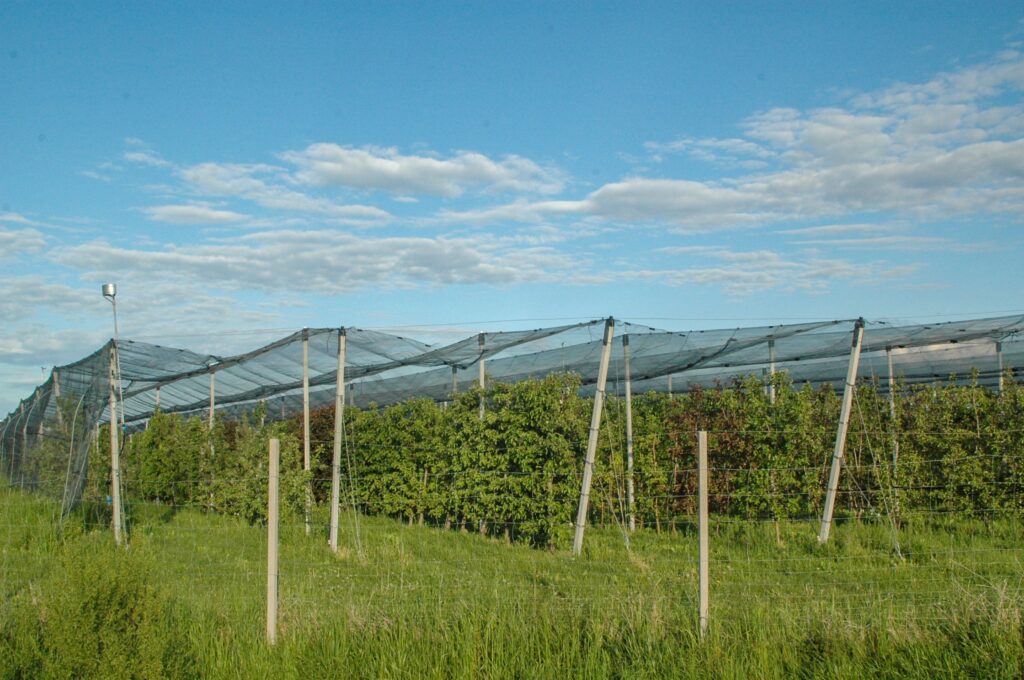
Here, the horticultural engineer with a doctorate has been focusing on special fruit tree varieties for almost 20 years. And he has been very successful. His customers travel long distances to buy his trees. 50,000 trees of all shapes and sizes with over 2,500 varieties of fruit can now be found on the 13 hectares of cultivated land. With varieties that – such as the tart “Baya Marisa” apple or the crunchy “Freiherr-von-Hallberg” (2013) – have long been known throughout the country.
It usually takes 15 to 20 years to breed such new varieties and the requirements are high. Neumüller: “They should grow in many locations and be resistant to tree diseases and pests. The fruit must also look and taste good. And finally, the growth size of the trees also plays a role. For the ‘normal’ garden, the trees should remain rather small, but still bear fruit.”
Customers who are unsure about the size and scope of a tree or berry bush are given expert advice. In addition, the chosen ones can even be inspected in a specially created show garden. After purchasing a tree, fruit growers can even sell the fruit without the usual international marketing fee.
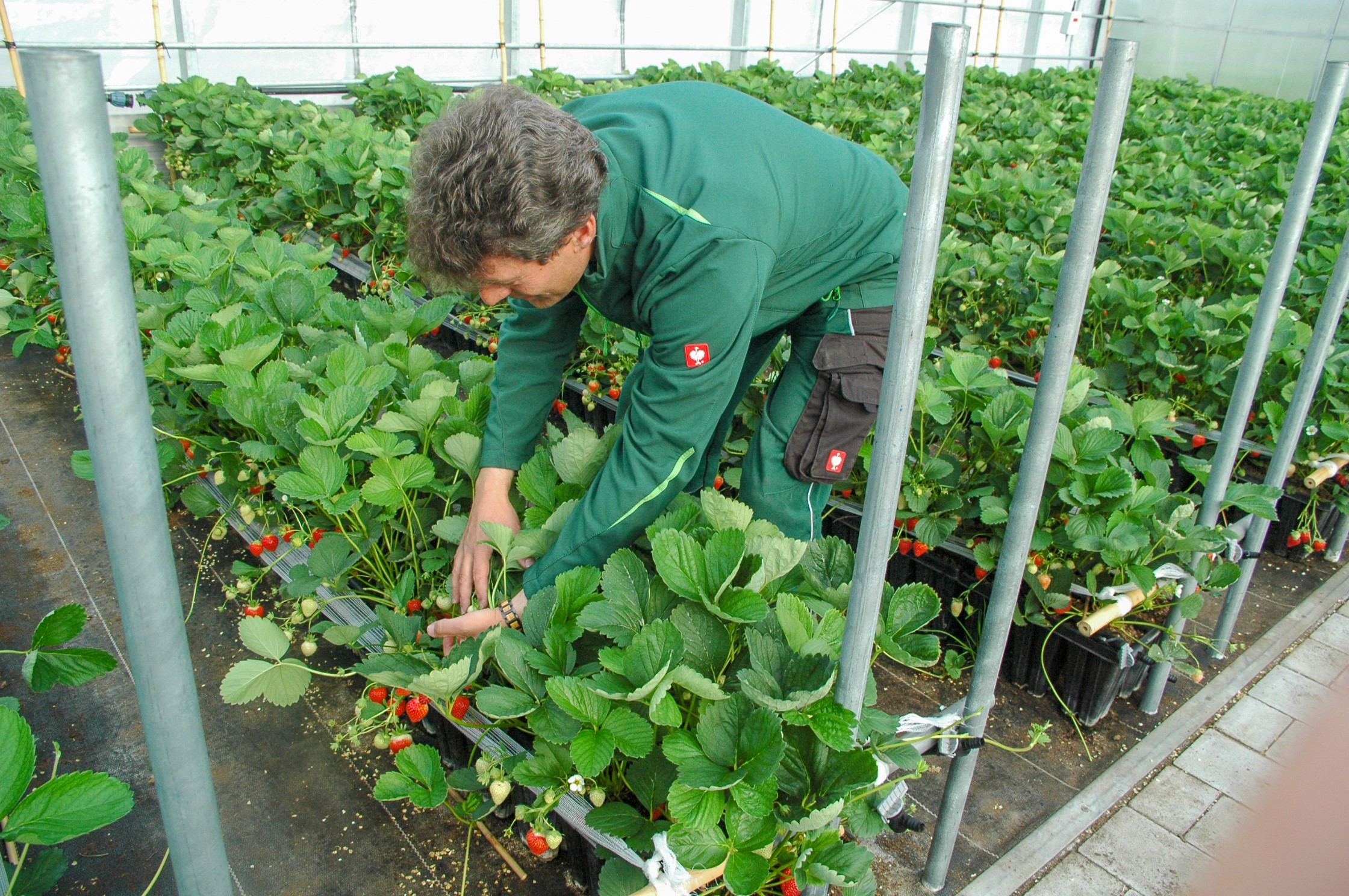
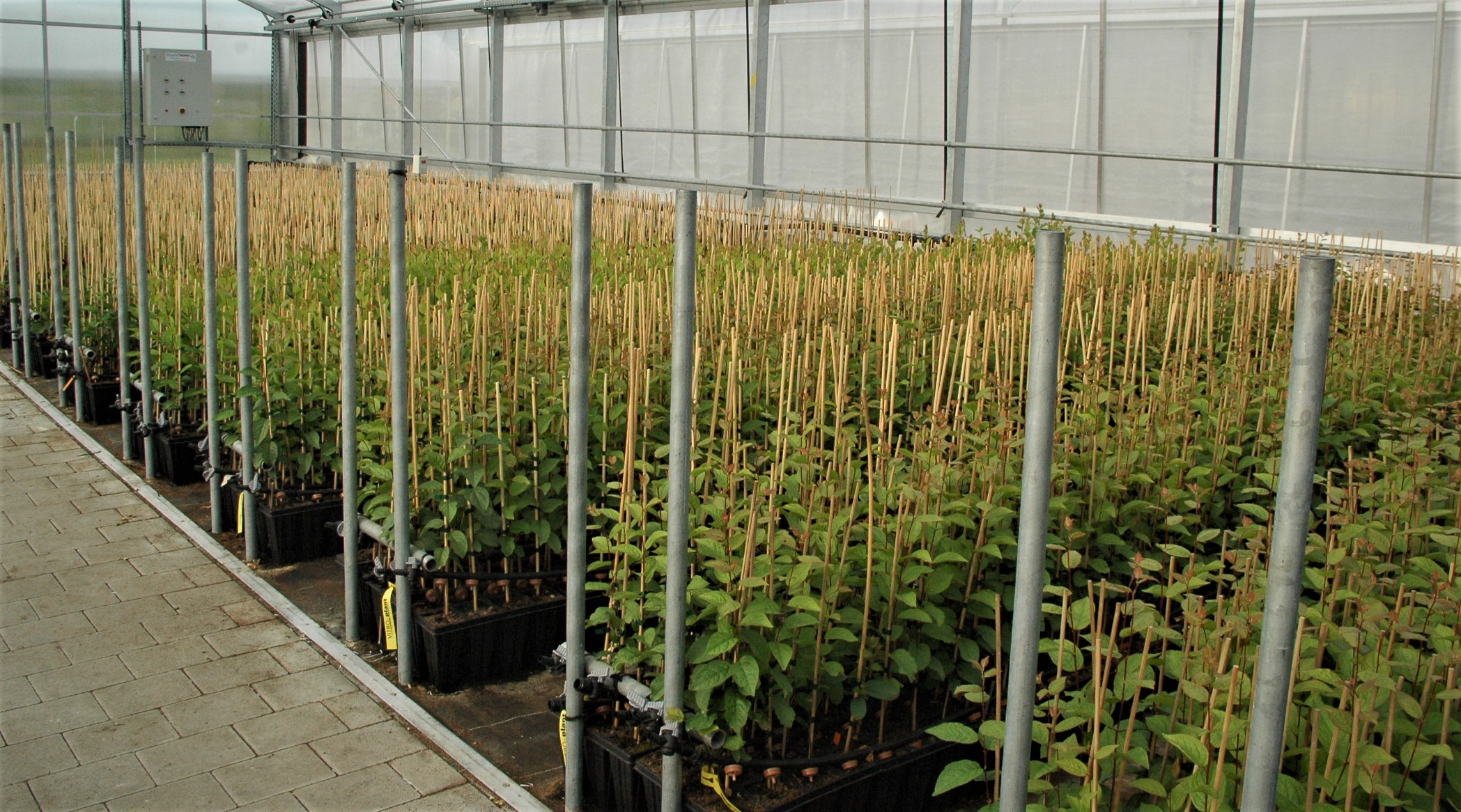
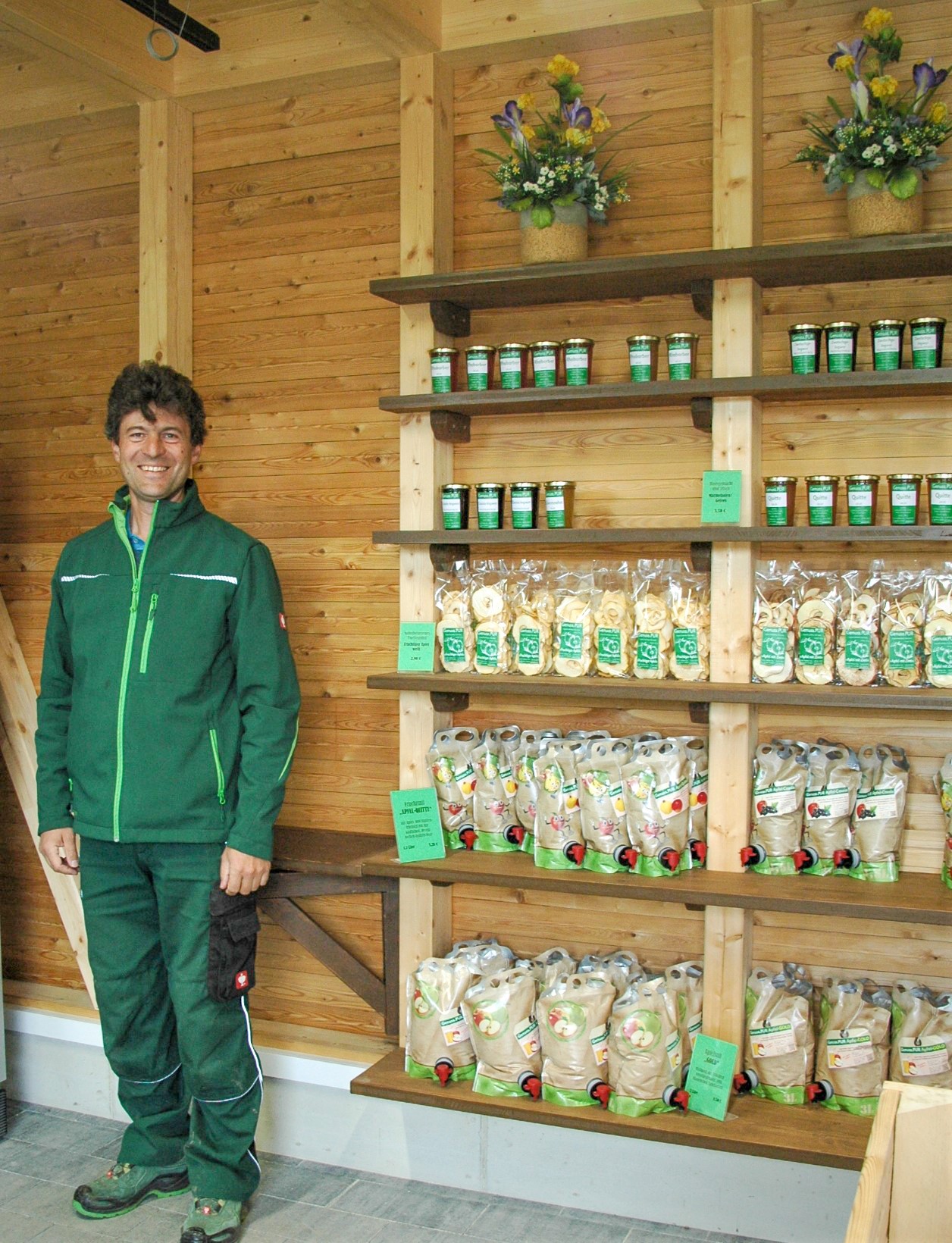
So much expertise is also in demand in research. Once a week, Neumüller gives lectures to students at the TU Munich in Weihenstephan. He is also invited by specialist committees to speak at conferences several times a year. Then there is the office work and the work on the 13 hectares of cultivated land. Together with two gardeners, a trainee, two other horticultural engineers and his father, he has to tend, prune, pot, water, net and finally harvest what is sold.
The result: a well-filled working day! This leaves the father of four little time to spend with his family. “I just love my job. And without this passion, none of this would be possible.”
Image material: © Beate Boenschatz
Poster © Munich Airport Business Park, picture&more Iris Besemer
More about agriculture, vegetables and other food products from Hallbergmoos under the Living tab in Regionality & Agriculture.
You need to load content from hCaptcha to submit the form. Please note that doing so will share data with third-party providers.
More InformationYou need to load content from reCAPTCHA to submit the form. Please note that doing so will share data with third-party providers.
More InformationYou need to load content from Turnstile to submit the form. Please note that doing so will share data with third-party providers.
More InformationYou are currently viewing placeholder content from Google Maps. To access the actual content, click on the button below. Please note that data will be shared with third-party providers.
Further informationYou are currently viewing a placeholder content from OpenStreetMap. To access the actual content, click the button below. Please note that doing so will share data with third-party providers.
More Information