Further contributions

The Bavarian Food Safety and Veterinary Control Authority (KBLV) has had its headquarters in the Munich Airport Business Park (MABP) in Hallbergmoos since 2023. As a unique authority in Germany, it monitors large-scale food producers throughout Bavaria and thus ensures safe food and animal welfare. With interdisciplinary teams and state-of-the-art equipment, the KBLV sets new standards in food inspection.
The KBLV was only founded in 2017, but has been operational since January 1, 2018, making it one of the youngest authorities in the Free State of Bavaria. Its task is to ensure food safety and monitor animal welfare in large agricultural businesses and slaughterhouses.
“We are different from other authorities,” explains Henning Brinkmann, spokesman for the KBLV. “The KBLV specializes entirely in large companies. This makes us a unique institution in the whole of Germany. The district offices also inspect smaller dairies, abattoirs and many other food producers. However, they naturally cannot draw from a similarly large pool of specialists as we can as an authority with Bavaria-wide responsibility.”
What makes KBLV special is its approach to inspections. “We can put together teams of different experts – tailored to the respective inspection situation,” explains Brinkmann. “In a dairy, for example, we can deploy food technologists and food inspectors who specialize in dairies. In slaughterhouses, on the other hand, veterinarians are required, and food chemists may be needed for flavorings.” This interdisciplinary approach enables the authority to assess even complex situations quickly and effectively. “It helps that we know many comparable businesses and therefore have a very good overview of industry standards. Specialist lawyers can also accompany the inspection teams. This allows us to decide quickly in emergencies what must and may be done – from animal welfare cases in a slaughterhouse to pest infestations in a large bakery,” adds Brinkmann.
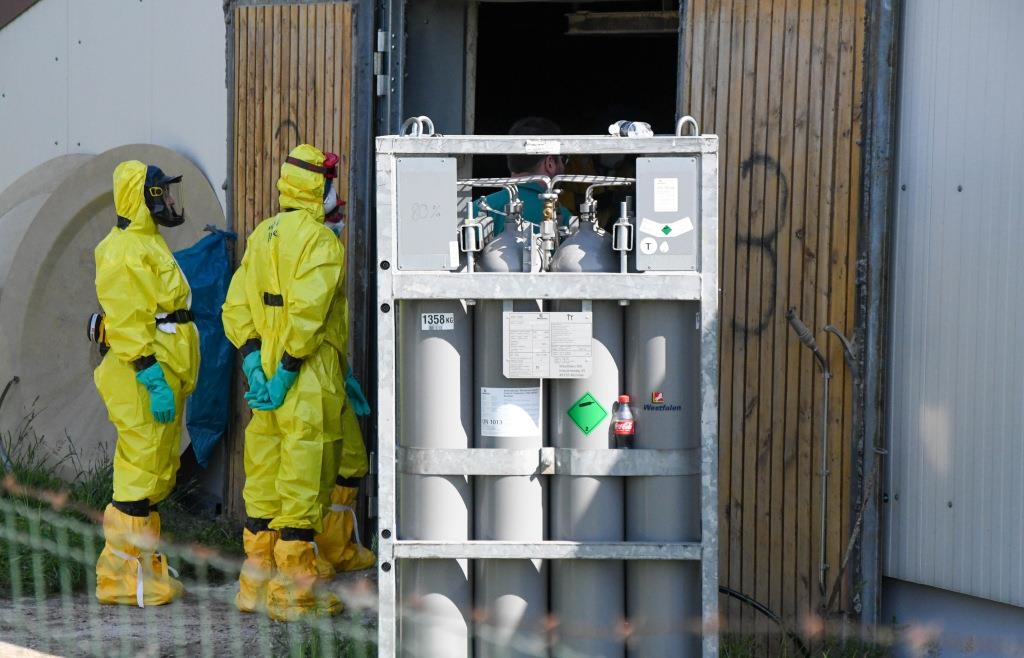
The KBLV is responsible for monitoring large companies. These include, among others:
“We also take over 1,000 product samples a year,” reports Brinkmann. “These are tested for spoilage, contamination or false declarations, for example. In 2022, out of over 1,300 samples, we only had one sample that had to be rejected as harmful to health.” For Brinkmann, the fact that the KBLV is still one of the more inconspicuous authorities is a positive sign. “The fact that many people don’t know us speaks volumes for the quality of food in Bavaria – and therefore ultimately for the inspections we carry out,” says the spokesperson.
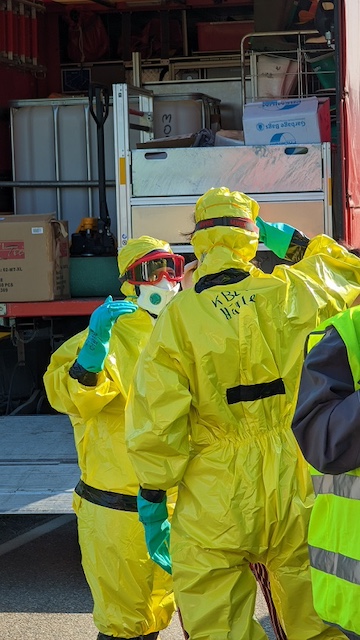

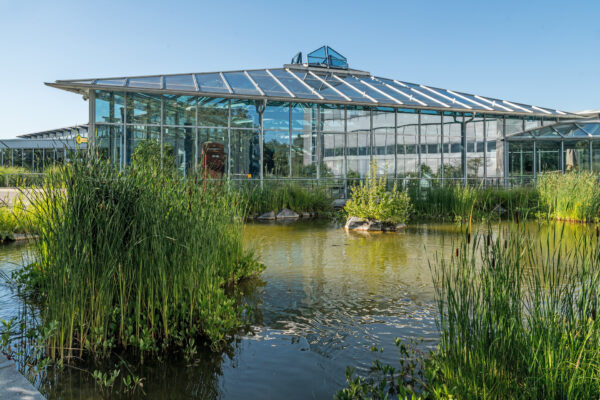
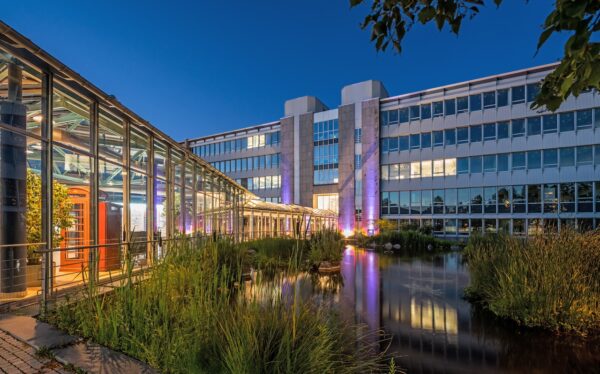
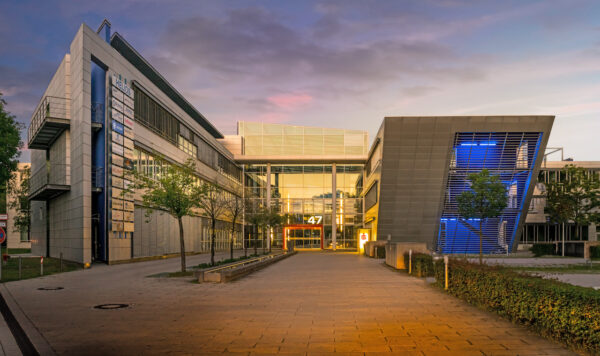
The KBLV, which has a total of 130 employees at five locations, has its headquarters in Kulmbach in Upper Franconia. In 2023, the authority opened its office in Hallbergmoos. “Hallbergmoos is perfect for us,” explains Brinkmann. “With various freeways in the immediate vicinity, we are very well connected and can quickly reach the various regions of Bavaria where many of the companies we inspect are located.” The modern facilities also make the location very attractive. There are currently 55 employees working at the Hallbergmoos site, covering over 50 percent of KBLV’s operations.
Brinkmann believes the authority is well positioned for the future: “We feel comfortable in our modern premises in Hub Eight. The proximity to Munich Airport is also a factor. With our veterinary border inspection post there, we operate one of the top 10 locations for the import of animals and products of animal origin in Europe. The short distance to the laboratories of the State Office for Health and Food Safety in Oberschleissheim is another advantage we enjoy here.”
With its work, the KBLV makes a significant contribution to food safety in Bavaria. Brinkmann summarizes: “The people of Bavaria can be sure that our monitoring is effective and that we are helping to ensure that manufacturers and farmers work well.” The establishment of the KBLV in Hallbergmoos is also another important step for the municipality in establishing a life science cluster that thrives on diversity and synergies.
Images (c) KBLV
You need to load content from hCaptcha to submit the form. Please note that doing so will share data with third-party providers.
More InformationYou need to load content from reCAPTCHA to submit the form. Please note that doing so will share data with third-party providers.
More InformationYou need to load content from Turnstile to submit the form. Please note that doing so will share data with third-party providers.
More InformationYou are currently viewing placeholder content from Google Maps. To access the actual content, click on the button below. Please note that data will be shared with third-party providers.
Further informationYou are currently viewing a placeholder content from OpenStreetMap. To access the actual content, click the button below. Please note that doing so will share data with third-party providers.
More Information